Do you love the punchy flavors of Asian cuisine but wonder which fermented sauces are actually good for you? If you’ve ever found yourself staring at bottles of gochujang, miso, and soy sauce at your local grocery store, unsure which is healthiest, you’re not alone. As someone who grew up in Korea, lived in Vancouver, and now calls Chicago home, I’ve had my fair share of taste tests—and nutrition label reading—on all three!
Why Fermented Sauces Matter in Asian Cuisine
Fermented sauces are the backbone of Korean, Japanese, and Chinese cooking. They’re not just about flavor—they’re packed with history, culture, and, yes, important nutrients. In my family, doenjang-jjigae (soybean paste stew) is the ultimate comfort food. My American husband and our kids have grown to love it too, even if they sometimes wrinkle their noses at the smell while it simmers.
When I first moved to Chicago and discovered H-Mart, I was overjoyed to see shelves lined with all kinds of fermented pastes and sauces. Sharing these flavors with my new American neighbors was my way of connecting our cultures. But, I often got asked: “Isn’t all Korean food super spicy?” (My pet peeve!) In reality, fermented sauces offer much more than heat—they bring umami, depth, and real nutritional benefits.
The Big Three: Korean, Japanese, and Chinese Fermented Sauces
What Are Fermented Sauces?
Fermentation uses beneficial microbes to break down foods, enhancing flavors and creating unique nutrients. Popular fermented sauces include:
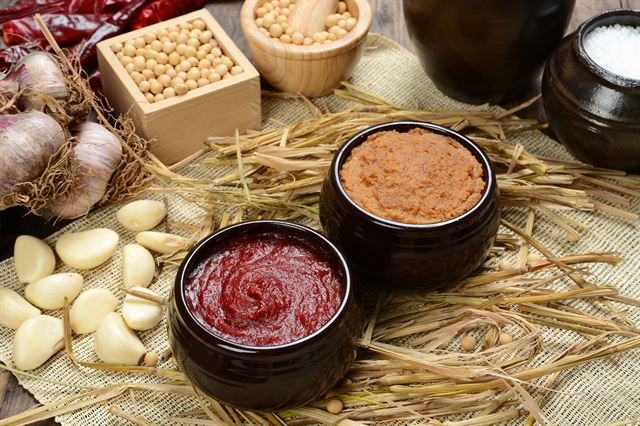
- Korean: Gochujang (red chili paste), doenjang (soybean paste), ganjang (soy sauce)
- Japanese: Miso (fermented soybean paste), shoyu (soy sauce)
- Chinese: Doubanjiang (chili bean paste), jiangyou (soy sauce), douchi (fermented black beans)
All three cuisines rely on soybeans, grains, and salt—but the fermentation methods and flavors differ.
Comparison Table: Korean vs. Japanese vs. Chinese Fermented Sauces
| Sauce | Main Ingredients | Fermentation Time | Probiotics | Sodium (per tbsp) | Key Nutrients | Typical Use |
|---|---|---|---|---|---|---|
| Doenjang (Korean) | Soybeans, salt | Months to years | High | ~900mg | Protein, fiber, vitamin K, isoflavones | Soups, stews, sauces |
| Gochujang (Korean) | Soybeans, glutinous rice, chili, salt | Months | Moderate | ~500mg | B vitamins, capsaicin, amino acids | Marinades, dipping sauce |
| Miso (Japanese) | Soybeans, rice/barley, salt | Months | High | ~630mg | Protein, manganese, copper | Soups, dressings |
| Doubanjiang (Chinese) | Broad beans, soybeans, chili, salt | 6-18 months | Moderate | ~950mg | Protein, fiber | Stir-fries, mapo tofu |
| Soy Sauce (all) | Soybeans, wheat, salt | Months | Low (if pasteurized) | ~900mg | Amino acids | Seasoning |
Health Benefits: What Does the Science Say?
Probiotics and Gut Health
Traditional Korean fermented sauces like doenjang and gochujang are often unpasteurized and teeming with live probiotics. These good bacteria can help with digestion and support your gut microbiome. Japanese miso also contains probiotics if it hasn’t been heated after fermentation. Most commercial soy sauces (including Chinese and Japanese styles) are pasteurized, which removes probiotics.
Nutrient Boost
Fermentation increases bioavailability of certain nutrients. For example, doenjang and miso are both high in protein, B vitamins, and minerals like manganese and copper. Gochujang adds capsaicin (from chili peppers), which may help boost metabolism. Chinese doubanjiang is robust in flavor but can be higher in sodium.
Salt Content and Health
One downside: all these sauces are salty. But you typically use only a small amount. According to a recent study, fermented soy products can even help regulate blood pressure when eaten in moderation due to their bioactive peptides (source).
Korean Sauces: Special Health Perks
Doenjang is particularly rich in isoflavones, which are linked to heart and bone health. Some research also suggests Korean fermented pastes may help with diabetes and inflammation (source).
How Do Korean Fermented Sauces Compare to Japanese and Chinese?
In my own kitchen, I rotate between doenjang, miso, and sometimes doubanjiang, depending on the dish. When I hosted my first dinner party for American neighbors, I made both doenjang-jjigae and miso soup. The reactions were interesting—people found the doenjang more earthy and robust, while miso was milder. A Chinese friend once brought her homemade doubanjiang to a potluck, and I realized the flavors were punchier but the sodium was intense!
Overall, Korean sauces tend to be thicker and funkier than Japanese ones, with more pronounced fermentation flavors. Chinese sauces often pack more heat and salt. Nutritionally, Korean doenjang and Japanese miso are closest, both offering protein, fiber, and probiotics. Gochujang is unique for its chili content and sweet-spicy balance.
Practical Tips for Choosing and Using Fermented Sauces
- Check the label: Look for short ingredient lists and “fermented” in the description.
- Mind the sodium: Use sauces as a flavor accent, not the main ingredient.
- Experiment: Try swapping doenjang for miso, or add a little gochujang instead of sriracha for a probiotic kick. See more in Ingredient Swaps.
- Store well: Keep open jars refrigerated. Traditional pastes can last months!
Frequently Asked Questions
1. Are Korean fermented sauces always spicy?
No! While gochujang is spicy, doenjang and ganjang are not. Korean cuisine balances sweet, salty, and earthy notes.
2. Is miso healthier than doenjang?
Both are healthy, but doenjang typically has more isoflavones and fiber, while miso may be lower in sodium per serving.
3. Can I substitute one for the other?
In many recipes, yes! Try using miso in place of doenjang for a milder result, or swap gochujang for chili bean paste for a different kick. For more on sauces and swaps, check out Korean Food 101.
4. Do all fermented sauces have probiotics?
Not always. Many commercial sauces are pasteurized for shelf stability, which kills probiotics. Choose traditional, unpasteurized versions for the best health benefits (source).
Join our Korean Food Discussion Forum.
Question of the Day
For more on Korean pantry basics, see my Essential Korean Pantry Staples for Beginners article. Whether you prefer the deep flavors of doenjang or the mellow taste of miso, remember—fermented sauces are more than condiments; they’re a tradition of health and flavor in every culture.
🛒 Stock Your Korean Pantry
- Gochujang (Korean chili paste) — the backbone of Korean cooking → View on Amazon
- Seasoned seaweed snacks (gim) — crispy, salty, dangerously addictive → View on Amazon
- Jongga kimchi — a reliable store-bought classic → View on Amazon
This post contains affiliate links. As an Amazon Associate, I earn from qualifying purchases.