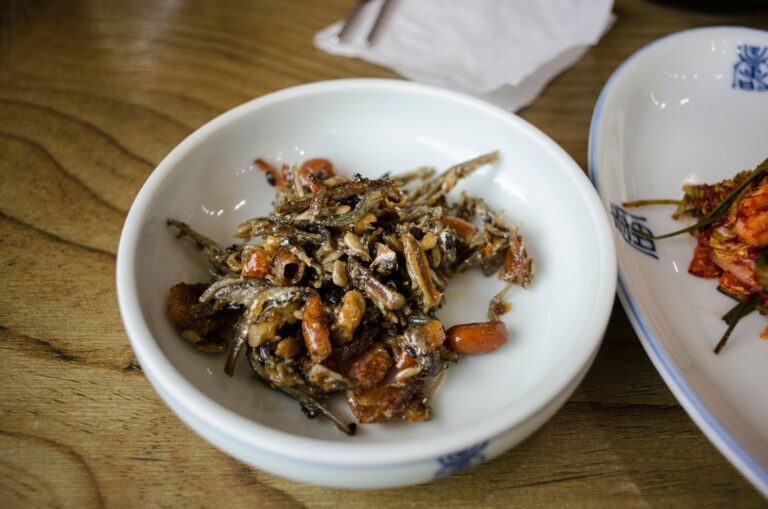
I have a theory about saeujeot: you either grew up with it and can’t imagine kimchi without it, or you opened a jar for the first time as an adult and thought “someone has made a terrible mistake.”
Learn more: jeotgal | fermentation
There is no in-between.
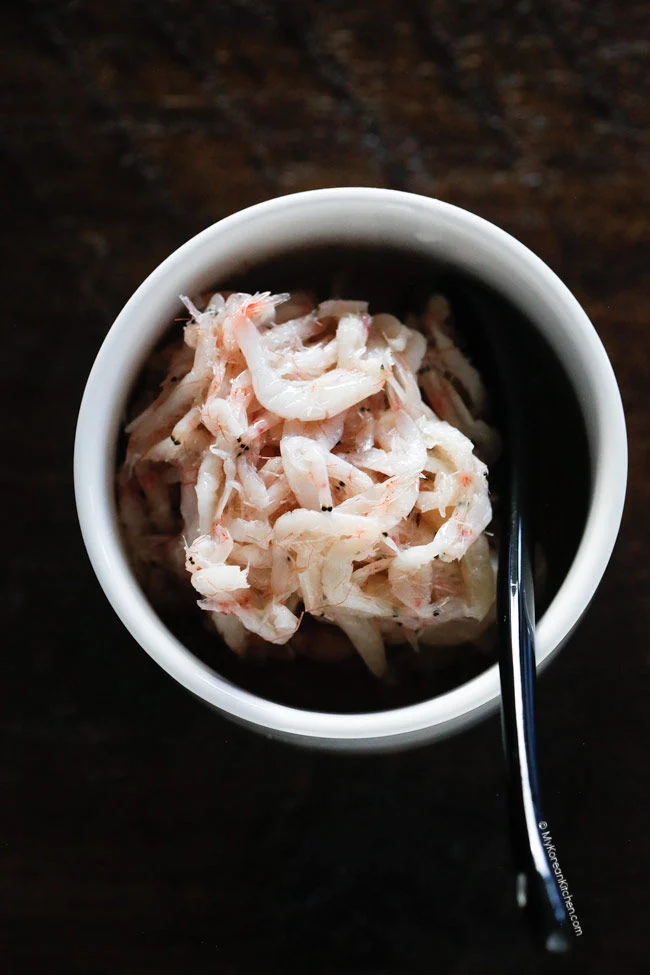
Saeujeot (새우젓) is Korean salted fermented shrimp — tiny shrimp preserved in salt and left to ferment until they become a pungent, intensely savory, deeply funky seasoning that’s absolutely essential to certain Korean dishes and completely terrifying to people who’ve never encountered it before.
My husband, the first time he smelled it, asked me if something had died in the fridge. Our dog Dubu, on the other hand, was immediately interested in a way that suggested his ancestors had strong opinions about fermented seafood.
Here’s what I wish someone had told me when I first started cooking with saeujeot on my own, without my grandmother standing over my shoulder telling me how much to add.
What Is Saeujeot?
Saeujeot is made by salting small shrimp and allowing them to ferment. What you get is a jar of tiny pink-grey shrimp in a salty, cloudy brine that smells aggressively of the ocean — not in a fresh-sea-breeze way, but in a “this has been fermenting for months and it knows what it’s doing” way.
It’s used as a seasoning, not as a main protein. A little goes a very long way. You’re not eating shrimp; you’re using shrimp to add salt and seafood depth to other dishes.
Allergy note: Saeujeot contains shellfish. It is not suitable for anyone with a shellfish allergy, and there’s no amount of cooking that changes that.
How I Use Saeujeot in My Kitchen
Saeujeot has a few specific jobs in Korean cooking, and it does them better than anything else:
1. Kimchi
This is saeujeot’s main job. Many traditional kimchi recipes — especially baechu kimchi (napa cabbage kimchi) — call for a small amount of saeujeot in the seasoning paste. It adds salinity and a deep seafood umami that fish sauce alone doesn’t provide.
How much: Usually 1-2 tablespoons for a large batch of kimchi. The shrimp pieces are often mashed or blended into the paste.
My grandmother’s trick: She’d take a few shrimp pieces from the jar, mash them with the back of a spoon, and mix them into the gochugaru paste. The brine goes in too — it’s part of the seasoning.
2. Soups and Stews
Some Korean soups use a small amount of saeujeot as a seasoning — particularly certain regional varieties of jjigae and some vegetable soups. It adds a salty, seafood-forward depth that’s different from anchovy broth or fish sauce.
How much: Start with a teaspoon and taste before adding more. It’s concentrated.
3. Dipping Sauces
Some Korean dishes come with a seasoned saeujeot dipping sauce — particularly certain pork dishes and some vegetable preparations. The saeujeot is mixed with vinegar, garlic, and sometimes gochugaru.
4. Side Dishes (Banchan)
Saeujeot occasionally appears in seasoning mixtures for specific side dishes, though this is less common than its use in kimchi and soups.
The Smell: Let’s Address It
Yes, saeujeot smells strong. Yes, it smells like fermented seafood. Yes, people who didn’t grow up with it often find it off-putting at first.
Here’s my honest take: the smell is much worse than the taste. Once saeujeot is cooked into a dish — especially kimchi, where it ferments further alongside the cabbage and gochugaru — you can’t taste “shrimp” at all. You just taste depth, savoriness, and that specific complexity that makes traditional kimchi taste like kimchi.
My husband has gone from “what is that smell?” to “did you use saeujeot in this kimchi? It tastes better when you do.” It took about three years, but he got there.
Saeujeot vs. Other Umami Ingredients
People sometimes ask if they can substitute something else. Here’s how saeujeot compares to other umami-heavy ingredients:
| Ingredient | Flavor profile | Can it substitute for saeujeot? |
|---|---|---|
| Fish sauce | Salty, liquid, fermented fish | In some recipes, yes — but it’s liquid and fish-based, not shrimp-based |
| Anchovy paste | Salty, concentrated, fish-forward | In some sauces and soups, yes — different flavor but similar function |
| Shrimp paste (other cuisines) | Strong shrimp, varies widely | Sometimes — but formulas, saltiness, and aroma differ significantly |
| Miso + salt | Savory, fermented soybean | For vegetarian depth, yes — but no seafood flavor |
| Dried kelp or mushrooms | Savory, vegetarian | For vegetarian broths and soups — provides umami without seafood |
The honest truth: For kimchi specifically, fish sauce is the most common substitute for saeujeot, and many modern kimchi recipes use fish sauce exclusively. The result is slightly different — less shrimp-forward, more general seafood umami — but still delicious.
Substitutes for Saeujeot
If you can’t use saeujeot (allergy, availability, or preference), here are your options:
| If you need… | Try this | How it differs |
|---|---|---|
| Kimchi seasoning without shrimp | Fish sauce | Liquid and fish-based, but provides similar salinity and umami |
| Vegetarian kimchi | Soy sauce + salt + extra gochugaru | No seafood flavor, but still savory |
| Soup seasoning without shellfish | Fish sauce or anchovy paste | Different seafood flavor, but similar function |
| Vegetarian soup depth | Miso + dried kelp | Savory and umami-rich without seafood |
What to Check on the Label
When I’m buying saeujeot, I look at:
- Ingredients: Should be shrimp and salt, possibly with a small amount of other seasonings. Some products add sugar or other ingredients.
- Allergen statement: Shellfish, obviously. But check for other potential allergens.
- Saltiness: Varies by brand. Some are saltier than others.
- Shrimp size: Smaller shrimp are generally preferred for saeujeot. Larger shrimp pieces may indicate a different product.
- Storage instructions: Most saeujeot needs refrigeration.
- Country of manufacture: Korean-made products are generally preferred, but check the label.
Where to Buy Saeujeot
Korean grocery stores: The best source. Saeujeot is usually in the refrigerated section near kimchi, fermented foods, or seafood products. You can compare brands and sizes in person.
Asian supermarkets: May carry Korean or other regional fermented shrimp products. Check the exact label — Thai, Vietnamese, and other Southeast Asian shrimp pastes are different products.
Online retailers: Compare ingredients, package size, shipping method, and refrigerated-delivery details. Saeujeot needs to stay cold during shipping, which can add cost.
Large online marketplaces: Check seller information, current package image, ingredient list, and storage requirements before ordering.
Storage and Handling
Saeujeot is fermented and salted, so it’s preserved — but it still needs care:
- Refrigerate always. Even unopened, I keep mine in the fridge.
- Use a clean utensil. Every single time. Don’t introduce new bacteria to a fermented product.
- Close the container tightly after each use.
- It lasts a long time. A jar of saeujeot will last 6-12 months in the fridge. Mine usually runs out before then because I make kimchi regularly.
- Watch for spoilage signs: Mold (actual fuzzy mold, not just the normal fermented appearance), an ammonia smell beyond the normal funky fermented smell, or damaged packaging.
- Don’t assume salt makes it safe indefinitely. Follow the manufacturer’s guidance.
Frequently Asked Questions
Is saeujeot the same as fish sauce?
No. Saeujeot is a salted fermented shrimp product with actual shrimp pieces in brine. Fish sauce is a liquid fish seasoning with no solid pieces. Their flavor, texture, and use are different, though fish sauce can substitute for saeujeot in some recipes.
Is saeujeot suitable for a shellfish allergy?
No. It contains shrimp and must be avoided by anyone with a shellfish allergy, regardless of how it’s prepared or cooked.
What is a vegetarian substitute for saeujeot?
For kimchi: soy sauce + salt + extra gochugaru. For soups: miso + dried kelp or mushroom broth. These provide savory depth without seafood, but the flavor will be different.
Does saeujeot taste fishy in the final dish?
Not really. When used in the right amount and cooked or fermented into a dish, saeujeot adds depth and umami rather than a distinct “shrimp” or “fish” flavor. In kimchi, you taste complexity and savoriness, not shrimp.
Product ingredients, saltiness, storage instructions, stock, prices, and retailer policies can change. I write these guides based on what I find when I’m shopping and cooking, but always check the current package label and retailer information before purchasing.
🛒 Stock Your Korean Pantry
- Saeujeot (salted shrimp) — kimchi's hidden depth → View on Amazon
- Jongga kimchi — a reliable store-bought classic → View on Amazon
- Gochugaru (chili flakes) — the color and heat of kimchi → View on Amazon
This post contains affiliate links. As an Amazon Associate, I earn from qualifying purchases.