
When I first moved to London in my twenties, I showed up at a Korean grocery in New Malden with a handwritten list from my grandmother and absolutely no idea what half the jars were — even though I’d grown up eating the food. The labels were all in Korean, the aisles were packed floor-to-ceiling, and I spent twenty minutes staring at three different types of soy sauce trying to figure out which one my halmeoni would have picked.
Learn more: Korean cuisine | USDA
Fast-forward a decade: I now live in Washington with my American husband (who has gone from “what is that smell?” to “can we have doenjang jjigae tonight?”), our little boy, and our dog Dubu, who has an uncanny ability to detect the exact moment I open a jar of gochujang from three rooms away.
Here’s what I wish someone had told me that day in New Malden: you don’t need a huge Korean pantry to start cooking Korean food at home. You need about five things. Maybe six if you’re feeling ambitious.
This is the starter kit I recommend to every friend who texts me “okay but WHERE do I even begin?”
The Core Korean Pantry Staples
These are the ingredients I reach for almost every single day. If you buy nothing else, buy these.
| Ingredient | Korean | What I use it for | What to look for on the label |
|---|---|---|---|
| Gochujang (고추장) | 고추장 | Sauces, rice bowls, marinades, stews | Heat level, soy/wheat content, sweeteners, refrigeration needed |
| Doenjang (된장) | 된장 | Soups, stews, dipping sauces, vegetables | Soy content, grain type, saltiness, texture |
| Korean soy sauce (간장) | 간장 | Seasoning, marinades, dipping sauces | Intended use (guk vs. jin), soy/wheat, sodium |
| Toasted sesame oil (참기름) | 참기름 | Finishing oil — rice, noodles, vegetables, namul | Toasted vs. untoasted, sesame allergen |
| Gochugaru (고춧가루) | 고춧가루 | Kimchi, soups, sauces, seasoning | Coarse vs. fine, heat level, ingredients (just chili, nothing else) |
| Short-grain rice (쌀) | 쌀 | Rice bowls, gimbap, bibimbap — basically every meal | Grain type, cooking instructions, package size |
| Seaweed & kelp (김 / 다시마) | 김 / 다시마 | Snacking, broth, gimbap wrapping | Seasoned vs. plain, sodium, intended use |
If You’re Overwhelmed: The Three-Item Start
I mean it. If you walk into a store today and buy exactly three things, get these:
| Ingredient | Why this one first | What you can make this week |
|---|---|---|
| Gochujang | Fermented chili depth you literally cannot replicate with anything else | Rice bowls, quick sauces, marinades, spicy noodles |
| All-purpose Korean soy sauce (jin-ganjang) | The salty-savory backbone of almost every Korean dish | Dipping sauces, stir-fried vegetables, marinades, soups |
| Toasted sesame oil | A few drops at the end of cooking transforms everything | Rice, noodles, vegetables, finishing sauces |
My husband’s favorite “I’m too tired to cook” dinner is literally just rice + a spoonful of gochujang + a drizzle of sesame oil + a fried egg. He thinks he’s being resourceful. I think he’s accidentally made bibimbap.
Staples to Add Later (Not Today)
Don’t buy these until you have a specific recipe in mind. I learned this the hard way — my London flat’s kitchen cupboard was approximately the size of a shoebox, and I once bought a jar of starch syrup that sat there for eight months before I finally used it.
| Ingredient | What it’s for | Why you can wait |
|---|---|---|
| Rice vinegar | Sauces, pickles, salads | Useful, but not needed for most first recipes |
| Korean starch syrup or rice syrup (mullyeot/jocheong) | Glazes, marinades, sweet sauces | Buy when a recipe specifically calls for it |
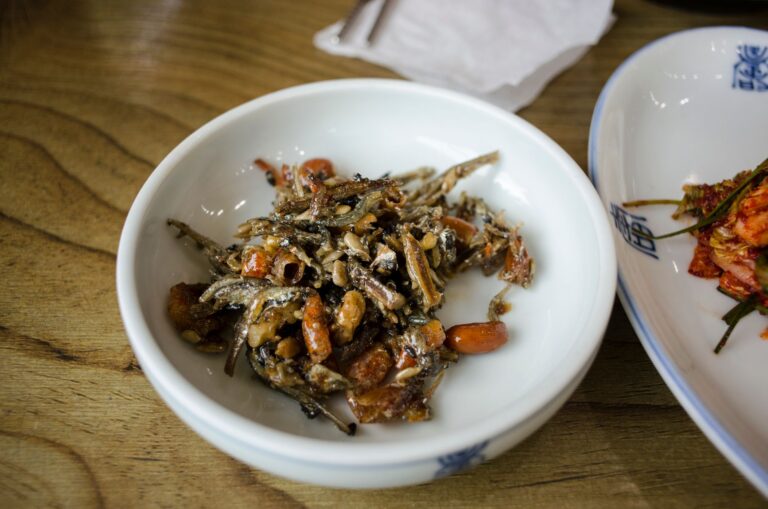
| Dried anchovies & kelp (멸치 / 다시마) | Broth and soups | Not suitable for every diet; ingredients vary by brand |
| Glass noodles (dangmyeon) | Japchae and noodle dishes | Buy when you’re actually making a noodle dish |
| Kimchi | Side dishes, fried rice, stews | Flavor, fish ingredients, and fermentation level vary — pick when you know what you like |
| Korean cooking wine | Recipe-specific sauces and marinades | Alcohol and non-alcohol types vary by market; buy when needed |
A Few Things I Wish I’d Known Before My First Korean Grocery Haul
Read the labels — every time. Korean pantry products commonly contain soy, sesame, wheat, fish, or shellfish. Allergen statements change between brands and even between batches. I check every single time, even for products I’ve bought a hundred times.
“Korean soy sauce” is not one thing. There’s guk-ganjang (for soups, lighter color, saltier) and jin-ganjang (all-purpose, darker, what you probably want). The bottle rarely explains this in English. When in doubt, grab the one labeled “진간장” or “jin.”
Buy the small jar. Especially for gochujang and doenjang. A 500g tub of gochujang will last a single person six months or more. I always tell friends: start small, finish it, then buy the big one when you know you’ll use it.
Storage matters. Gochujang and doenjang go in the fridge after opening. Sesame oil goes dark and cool (not next to the stove, no matter how convenient). Rice vinegar is fine on the counter. When in doubt, the fridge is almost always the safer bet.
Don’t trust “vegan” or “gluten-free” without reading the actual ingredients. Some gochujang brands use wheat. Some doenjang brands add fish-derived ingredients. Labels change, and marketing claims on the front of the jar don’t always match the ingredient list on the back.
Watch: Korean Pantry Ingredient Overview
This public YouTube video from teekeatz gives a quick visual overview of the staples I’ve listed above. I find it helpful to see what the ingredients actually look like before you’re standing in the store trying to match them to a list.
(YouTube embed: Korean pantry staple ingredients by teekeatz — https://www.youtube.com/watch?v=mrTb8JhIwJE)
Use current package labels and product instructions when choosing ingredients — what you see in a video may not match exactly what’s on your shelf.
Where to Actually Buy These
I’ve bought Korean ingredients in exactly four types of places, and each one has its strengths:
Korean grocery stores — The gold standard. If you have one within driving distance, go there first. They’ll have every paste, sauce, rice, noodle, and dried good you could want, and the staff usually know exactly what you’re looking for even if you mispronounce it (I’ve tested this in three countries).
Asian supermarkets (H Mart, 99 Ranch, Wing Yip, etc.) — Good Korean sections alongside Chinese, Japanese, Vietnamese, and Thai products. The Korean aisle is usually well-stocked, but you’ll need to compare labels because some products are imported for a broader Asian market and may not be the exact Korean brand you want.
Mainstream Western supermarkets — Increasingly carry gochujang, sesame oil, rice vinegar, and seaweed snacks. The selection is small but getting better every year. Good for emergency “I need sesame oil RIGHT NOW” situations.
Online retailers and marketplaces — Check seller ratings, current product images, ingredient lists, package sizes, and return policies before ordering. I’ve had good luck with dedicated Korean grocery delivery services; I’ve had less good luck with random third-party sellers on big marketplaces.
For a deeper dive, check out my full Where to Buy Korean Ingredients guide and the Korean Cooking Starter Kit recommendations.
Frequently Asked Questions
What are the first Korean ingredients I should buy?
Gochujang, an all-purpose Korean soy sauce (jin-ganjang), and toasted sesame oil. That’s genuinely enough to start cooking several different Korean dishes this week. Add more ingredients only when you have a specific recipe in mind — that’s how you build a pantry you’ll actually use.
Do I need every ingredient to cook Korean food?
Not even close. My grandmother made incredible meals with fewer ingredients than most people put in a single bibimbap bowl. Many Korean home dishes use just three or four pantry staples. Start small, and use practical substitutes when a recipe calls for something you don’t have yet.
Are Korean pantry staples always spicy?
No, not at all. Gochujang and gochugaru bring heat, but soy sauce, doenjang, sesame oil, rice, seaweed, rice vinegar, and most other Korean pantry ingredients aren’t spicy at all. Korean food has a reputation for heat, but the foundation of the cuisine is actually fermented savory depth — the spice is just one layer.
How long do Korean pantry staples last?
It depends on the ingredient, but generally longer than you’d think. Unopened gochujang and doenjang can last a year or more. Once opened, they keep for months in the fridge (they’re fermented, so they’re already preserved). Sesame oil is best used within 6 months of opening. Dried ingredients like seaweed and anchovies last indefinitely if kept dry. Always check the package date and storage instructions.
Product ingredients, allergens, storage directions, stock, prices, and retailer policies can change. I write these guides based on what’s available when I’m writing them, but always check the current package and retailer information before purchasing.
🛒 Stock Your Korean Pantry
- Gochujang (Korean chili paste) — the backbone of Korean cooking → View on Amazon
- Seasoned seaweed snacks (gim) — crispy, salty, dangerously addictive → View on Amazon
- Jongga kimchi — a reliable store-bought classic → View on Amazon
This post contains affiliate links. As an Amazon Associate, I earn from qualifying purchases.