I have a confession to make: the first time I bought gochujang on my own — without my mother, without my grandmother, just me in a Korean grocery store in New Malden at age 23 — I stood in the aisle for twenty minutes and then bought the wrong thing.
Learn more: gochujang
Not wrong as in “inedible.” Wrong as in “this is a pre-made tteokbokki sauce, not plain gochujang.” I didn’t realize until I got home, opened the tub, and noticed it was already seasoned with sugar and vinegar. My grandmother would have been so disappointed.
Since then, I’ve bought gochujang in Korean markets in Seoul, London, and Washington. I’ve compared dozens of brands, heat levels, sizes, and formulations. And I’ve watched my American husband go from “what is that red stuff?” to keeping his own personal gochujang tub in the fridge door (he puts it on eggs — don’t judge until you’ve tried it).
Here’s everything I wish someone had told me that day in New Malden.
What Is Gochujang, Exactly?
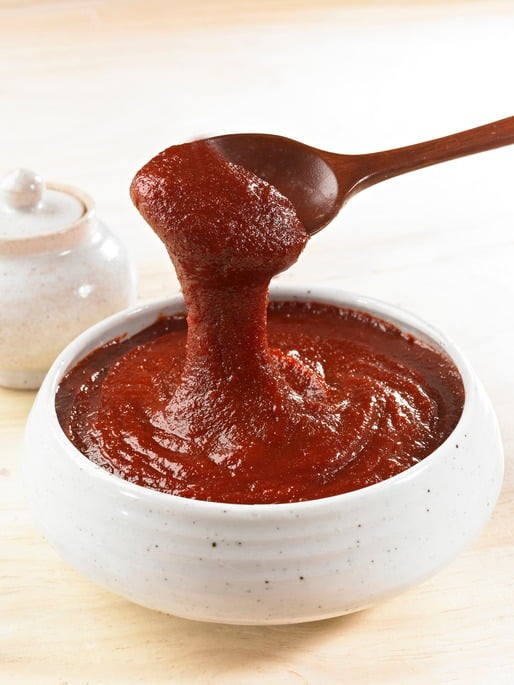
Gochujang (고추장) is Korean fermented red chili paste. It’s made from gochugaru (Korean red pepper powder), fermented grain (usually rice or wheat), soybeans or soybean-derived ingredients, salt, and sweeteners. The result is a thick, sticky, deeply flavored paste that is simultaneously savory, sweet, fermented, and spicy — sometimes all at once.
It’s the backbone of bibimbap sauce, tteokbokki, gochujang marinades, Korean-style dipping sauces, and countless soups and stir-fries. It’s not the same as gochugaru (flakes), sriracha (vinegar-based hot sauce), or any other chili product. It’s its own thing, and there’s no real substitute for the fermented depth it provides.
Important distinction: Plain gochujang is a paste you cook with. Pre-made gochujang sauce (like tteokbokki sauce or bibimbap sauce) is already seasoned and ready to use. They’re not interchangeable. If a recipe says “gochujang,” it almost always means the plain paste.
How to Choose Gochujang: What Actually Matters
When you’re standing in front of a wall of red tubs, here’s what to actually look at:
| What to check | Why it matters | My recommendation for beginners |
|---|---|---|
| Heat level | Products range from mild to very hot, often marked with Korean heat-scale indicators | Start with mild or medium — you can always add more |
| Size | Gochujang is concentrated and lasts a long time, but freshness matters after opening | 500g or smaller for your first tub |
| Ingredient list | Grains, sweeteners, soybean content, and additives vary significantly between brands | Read it, especially for allergy or dietary needs |
| Texture | Most cooking gochujang is a thick paste; sauces are thinner and pre-seasoned | Choose a paste for flexible cooking use |
| Product type | Plain paste vs. pre-made sauce vs. marinade — these are different products | Make sure you’re buying plain gochujang paste |
The biggest mistake beginners make: Buying a pre-made sauce thinking it’s plain gochujang. Look for 고추장 (the Korean characters) and check that the ingredient list is relatively short — chili powder, grain, soybeans, salt, sweetener. If it lists vinegar, garlic, and a bunch of seasonings, it’s probably a pre-made sauce.
Where to Buy Gochujang in the US
I’ve bought gochujang across about fifteen different US cities over the years, and here’s what I’ve found:
Korean supermarkets: The gold standard. They’ll carry multiple brands, sizes, and heat levels, and you can compare labels in person. If you have a Korean market within driving distance, go there first. The staff can usually point you to the right aisle even if you don’t read Korean.
Asian grocery stores (H Mart, 99 Ranch, etc.): Good Korean sections with solid gochujang selections. H Mart in particular has an excellent Korean pantry section. The selection may be smaller than a Korean-focused market, but it’s more than enough for most home cooks.
Mainstream supermarkets: Increasingly carry gochujang — I’ve found it at Whole Foods, some Kroger locations, and even a few Walmarts. The selection is usually limited to one or two brands, but it’s getting better every year.
Online Korean grocery retailers: Several dedicated Korean grocery delivery services ship nationwide. Check seller details, current product images, ingredients, package sizes, and shipping policies before ordering. Gochujang is heavy, so shipping costs can add up for larger tubs.
Large online marketplaces: Useful for comparing options, but check the seller, current product images, package size, and shipping details before ordering. I’ve had good luck with dedicated sellers; I’ve had less good luck with random third-party listings.
Where to Buy Gochujang in the UK
The UK Korean food scene has grown enormously since I lived in London, and gochujang is much easier to find now than it was a decade ago.
Korean grocery stores: Check local Korean shops — London has several in New Malden and central London, and other major cities have growing Korean communities. These stores typically carry the widest range of brands and heat levels.
Asian supermarkets: Larger Asian supermarkets (Wing Yip, H-Mart UK, etc.) carry Korean gochujang alongside other East Asian products. The Korean section is usually well-stocked.
Specialist online retailers: Oseyo and other UK Korean food retailers ship gochujang nationwide. Compare delivery areas, minimum order requirements, and shipping charges before checkout.
Large online marketplaces: Amazon UK and other marketplaces list Korean gochujang products, but confirm the exact item and seller rather than relying on a generic search result. Product images on marketplace listings can be outdated.
Reading a Gochujang Label
Labels vary substantially between brands and regions. Here’s what I actually check:
Ingredient order: Ingredients are listed by weight. If sugar or corn syrup is the first ingredient, the gochujang will be quite sweet. If gochugaru (chili powder) is first, it’ll be spicier. Compare the first 3-4 ingredients when choosing between products.
Allergen information: Most gochujang contains soy. Many also contain wheat. If you need to avoid gluten, you’ll need to specifically look for wheat-free or gluten-free labeled products — they exist but aren’t common.
Heat indicator: Korean products may use words (mild/medium/hot), numbers, or visual symbols (chili pepper icons). Some labels have a heat scale printed directly on the tub. Online retailer descriptions can be incomplete, so check the actual package image when possible.
Product type: This is where beginners get tripped up. Confirm you’re buying plain gochujang paste (고추장), not a cooking sauce, dipping sauce, or flavored marinade. The Korean characters 고추장 on the front are your best indicator.
Storage instructions: Most gochujang needs refrigeration after opening. I keep mine in the fridge door where it’s easy to grab.
Brands You’ll Commonly See
Brand availability changes by market and retailer, but these are the names I see most often:
| Brand | What I check on each product | Notes |
|---|---|---|
| CJ / Haechandle (해찬들) | Heat level, tub size, ingredient list, product type | Probably the most widely available brand globally. Consistent quality. |
| Chung Jung One (청정원) | Heat level, ingredients, paste vs. sauce | Good all-rounder. Often slightly milder than CJ. |
| Sempio (샘표) | Ingredient list, size, storage guidance | Known for quality. Often slightly more expensive. |
| Other Korean or regional brands | Country of manufacture, ingredients, product label | Worth trying if you find them — some regional brands are excellent. |
My beginner recommendation: CJ Haechandle, medium heat, 500g tub. It’s available almost everywhere, the flavor is balanced, and it’s versatile enough for both Korean recipes and Western cooking experiments.
Online vs. In-Store: Which Is Better?
| Method | Advantages | Watch out for |
|---|---|---|
| In-store | Compare sizes, read labels in person, check expiry dates, ask staff | Travel time, limited store selection |
| Online | Convenient, compare multiple retailers, wider selection | Seller reliability, product photo accuracy, shipping cost, delivery time |
For your first tub, I genuinely recommend buying in-store if you can. Being able to compare sizes, read the full Korean label, and check the expiry date makes a real difference. Once you know what brand and size you like, online ordering becomes much easier.
Storage: Keeping Gochujang Fresh
Gochujang is fermented, so it’s naturally preserved — but it still needs care:
- Refrigerate after opening. Always. The tub may say “store in a cool, dry place” for unopened storage, but once you break the seal, it goes in the fridge.
- Press the surface flat before closing the lid. This minimizes air exposure and prevents the top from drying out and forming a dark, hard crust.
- Use a clean spoon. Every single time. Double-dipping introduces bacteria that can cause off-flavors in a fermented product.
- It darkens over time. This is completely normal. The surface may turn darker brown or even slightly blackish — this is oxidation, not spoilage.
- It lasts a long time. An opened tub of gochujang will last 6-12 months in the fridge. Mine never lasts that long because I cook with it at least three times a week.
Frequently Asked Questions
Is gochujang the same as sriracha?
No. Gochujang is a thick, fermented chili paste with deep savory-sweet complexity. Sriracha is a vinegar-based chili sauce that’s thinner and more acidic. They serve completely different purposes in cooking. You cannot substitute one for the other without significantly changing the dish.
Is gochujang gluten-free?
Most gochujang is not gluten-free. Traditional recipes use wheat or barley as the grain base. Some brands now offer wheat-free or gluten-free versions, but you need to specifically look for that labeling — don’t assume any random tub is safe. Always check the current allergen statement.
How spicy is gochujang?
It varies enormously by brand and heat level. “Mild” gochujang is gently warm — think a mild salsa. “Hot” gochujang can be genuinely spicy. If you’re unsure, start with mild or medium and add gochugaru (Korean chili flakes) separately if you want more heat. It’s much easier to add heat than to take it away.
Can I use gochujang as a condiment straight from the tub?
You can, but it’s quite intense on its own. Most Koreans mix it with a little sesame oil, vinegar, or sugar before using it as a dipping sauce or condiment. Straight from the tub, it’s best used as a cooking ingredient — stirred into stews, mixed into marinades, or blended into sauces.
Why does my gochujang look darker on top?
This is normal oxidation. The surface of the paste darkens when exposed to air. You can either scrape off the darkened layer or just stir it back in — both are fine. To prevent this, press the surface flat with the back of a spoon before closing the lid, and consider placing a piece of plastic wrap directly on the paste surface before putting the lid on.
Product ingredients, allergens, availability, prices, and retailer policies can change. I write these guides based on what I find when I’m shopping and cooking, but always check the current package label and retailer information before purchasing.
🛒 Stock Your Korean Pantry
- Gochujang (Korean chili paste) — the backbone of Korean cooking → View on Amazon
- Seasoned seaweed snacks (gim) — crispy, salty, dangerously addictive → View on Amazon
- Jongga kimchi — a reliable store-bought classic → View on Amazon
This post contains affiliate links. As an Amazon Associate, I earn from qualifying purchases.